
Stop Verification Stalls: 3 Fixes for 2026 Map Signal Syncs
Have you ever been in the middle of optimizing your Google My Business listing, only to be hit with that frustrating stall during verification? You know the one—your efforts seem to freeze just as you’re about to see real results. I remember that lightbulb moment all too well. After countless hours spent troubleshooting, I realized that these verification hiccups are more predictable than we think, especially with the upcoming 2026 map signal adjustments. It’s like navigating a maze where every wrong turn costs you local visibility. But here’s the good news: I’ve cracked the code, and today, I want to share exactly how you can fix these stop verification stalls caused by 2026 map signal sync errors.
Why Signal Sync Issues Play Hardball with Your Map Visibility
The reason this problem feels so personal is because it directly impacts your local rankings and, ultimately, your business’s bottom line. When signals don’t sync properly—whether they’re from your Wi-Fi, geo-locations, or other sources—it creates a ripple effect, causing ghosting, ranking drops, or verification blocks. In early attempts to fix this, I made a classic mistake: assuming that simply refreshing your listing or waiting it out would solve the problem. Trust me, I was wrong. According to recent studies by BrightLocal, local search visibility can decline sharply if signal inconsistencies aren’t addressed promptly, especially with the 2026 updates rolling out. So, it’s clear that understanding and fixing signal sync issues isn’t just optional; it’s essential for staying competitive.
Is Signal Management Really the Key to Your 2026 Success?
It’s a fair question—given all the moving parts in local SEO, why should you focus on map signal syncs? Well, early on, I overlooked how central these signals are to Google’s ranking algorithms. I once believed that content quality alone would carry my rankings, but experienced firsthand how ghost signals and sync errors could tank my visibility overnight. That mistake taught me a crucial lesson: addressing signal issues directly can restore and even boost your map rankings. If you’re facing persistent verification stalls or ranking dips, it’s worth diving into specific fixes like [signal repair tactics](https://gmbexorcist.com/3-signal-repair-tactics-to-end-2026-map-proximity-ghosting). It’ll make a world of difference. Ready to explore how?
Identify and Isolate Faulty Signals Quickly
First, get a clear picture of your current signals. Use tools like Google Search Console and GMB Insights to monitor discrepancies in location data, Wi-Fi signals, and user-generated data points. During a personal experience, I ran a batch of tests on a suspected stall, discovering inconsistent Wi-Fi signals that seemed out of sync with real-world locations. Addressing this, I focused on zooming in on Wi-Fi accuracy, which is often a culprit in verification stalls. Remember, just like a detective narrows down clues, your goal is to pinpoint where the signals deviate from reality. Check for ghost signals or duplicate pins that might be confusing Google’s algorithms. For step-by-step guidance, explore the detailed methods on signal repair tactics—trust me, it’s game-changing.
Scrub and Remove Ghost Pins and Signals
Ghost pins—those invisible or misplaced map markers—can severely impair your rankings. Think of them as static clutter in a radio signal, interfering with clarity. I once had a listing plagued with multiple ghost pins hiding in the background, causing my verification attempts to repeatedly fail. The fix was to scrub these phantom pins using specialized tools. Begin by exporting your map data, then identify and delete these ghost pins manually or through automated scripts. Use tools that filter out phantom addresses, such as ghost address scrubbing. Consistently cleaning these artifacts clears the path for accurate signal recognition, leading to smoother verification and better rankings. Removing the clutter doesn’t just tidy up your map; it removes barriers to Google’s trust in your location.
Correct and Reinforce Map Coordinates
Next, focus on the core of location data—your coordinates. Incorrect or misaligned GPS data acts like a warped mirror, distorting your real-world position. I faced this firsthand when a client’s store appeared several blocks away, causing verification issues. To fix this, verify your coordinates in Google My Business and cross-check with other mapping tools. Use dedicated geo-correction software or manual overrides within GMB to set pinpoint accuracy. When connections between your physical location and online data falter, Google gets confused, and verification stalls. Reinforcing these coordinates ensures your listing aligns perfectly with the actual business, smoothing future updates and map packs. Practice makes perfect—repeat this process regularly to prevent future misalignments.
Tackle Signal Conflicts and Data Overlaps
Conflicting signals stem from overlapping data sources or mismatched business info. Think of it like two radio channels broadcasting the same station but with different frequencies—confusing for the receiver. Use tools to identify conflicts like CID errors or duplicate NAP (Name, Address, Phone Number) entries. I’ve employed automated cleanup routines that scan for inconsistencies and unify data points, which you can explore through CID conflict fixes. Removing these conflicts prevents Google from mixing signals, which can cause verification delays or ranking drops. Think of data consistency as your business’s reputation—it needs to be clear, uniform, and trustworthy in the eyes of Google.
Implement Latency and Signal Speed Fixes
The speed at which signals propagate impacts synchronization. High latency can produce ghost signals or flickering map packs, similar to static in a radio. Adjust your network settings, switch to wired connections, and clear local caches to boost signal clarity. In my own testing, adjusting network latency reduced flickering issues significantly, improving map stability. For proven techniques, check the latency fix guides. Ensuring rapid, synchronized signals is crucial for verification success and maintaining your local rank in the build-up to 2026.
Regularly Clean and Audit Data for Long-Term Success
Consistency is the backbone of reliable signals. Schedule routine audits using tools like Google’s Business Profile Manager and third-party cleanup utilities. Remove duplicate or outdated info, ensure NAP consistency, and address any new ghost signals. Once, I set a monthly schedule, which kept my data pristine and my verification processes smooth. Think of this as a regular health check—preventative maintenance that keeps your signals healthy and your rankings resilient, especially with the upcoming 2026 update that tightens signal scrutiny.
By systematically executing these steps, you eliminate the common culprits behind verification stalls and ghost signals. Building a clean, accurate signal profile acts like strengthening your business’s GPS lock—making verification faster, easier, and more reliable each time. Stay on top of signal integrity, and Google will reward your commitment with better visibility and map pack prominence in 2026 and beyond.
 Many local SEO practitioners believe that simply deleting ghost pins or updating business information will instantly improve rankings, but this is a misconception rooted in oversimplification. The truth is, the nuances of map signal health are far more complex, and overlooking these subtleties can lead to costly mistakes. One common trap is relying solely on automated tools to scrub data without understanding the underlying signal integrity. Automated processes might eliminate visible issues, but they often miss hidden signal conflicts lurking beneath, which continue to sabotage your efforts. For example, cleaning ghost address fragments without addressing signal latency or overlapping geo-nodes can give a false sense of security, while the real problem remains unresolved. For a comprehensive approach, you should consider a holistic signal repair strategy—targeting ghost signals, CID conflicts, and geo-code anomalies simultaneously. This aligns with expert recommendations emphasizing the importance of maintaining signal consistency across multiple layers. In my experience, neglecting expert-guided signal diagnostics can cause your rankings to plateau or even decline despite superficial cleanup efforts. To avoid falling into this trap, familiarize yourself with detailed methods on signal repair. Remember, effective cleanup isn’t just about eliminating visible clutter; it’s about restoring the health of your entire map signal ecosystem. Have you ever fallen into this trap? Let me know in the comments.
Staying on top of your Google My Business (GMB) signals requires more than just quick fixes—standard tools can only take you so far. To truly keep your listings optimized and resilient against emerging map signal challenges, I rely on a blend of specialized software and meticulous manual techniques. These tools help me diagnose hidden issues, automate routine cleanup, and monitor long-term health, ultimately ensuring consistent visibility in local searches.
Invest in Advanced Signal Monitoring Software
My go-to for real-time signal analytics is BrightLocal’s Rank Tracker. It provides granular insights into your local rankings across multiple locations, helping identify fluctuations that might indicate underlying signal conflicts. I personally appreciate its historical data feature, which allows me to spot emerging anomalies early. Additionally, GMBSpy is invaluable for tracking competitor moves and understanding how their signal adjustments impact local positioning. By integrating these tools into my routine, I can proactively address issues before they escalate, rather than firefighting after the fact.
Leverage Manual Data Validation Techniques
Tools are powerful, but manual validation remains irreplaceable. I regularly conduct geo-coordinate audits using coordinate correction methods. This involves comparing your GMB coordinates with official sources like Google Maps and Bing Maps, ensuring consistency. I also verify signal sources such as Wi-Fi and IP align with your physical business location, referencing Google’s own documentation on signal sources. These manual checks catch subtle issues automated tools might overlook, like phantom geo-nodes or inconsistent NAP data, which can undermine your long-term rankings.
Automate Routine Cleanup with Specialized Scripts
One of my favorite approaches for ongoing maintenance is utilizing custom scripts that scrub ghost pins and duplicate signals. For example, scripts that interface with Google Maps API enable me to batch delete ghost addresses—saving hours of manual work. I often adapt open-source routines from community forums and tailor them for my clients’ needs, following best practices outlined in Google’s developer resources. Regular execution of such scripts ensures your map remains uncluttered, reducing the risk of verification stalls caused by phantom signals.
Where Do I See the Future of GMB Maintenance?
Looking ahead, I predict increased reliance on AI-driven signal diagnostics. As Google continues to refine its algorithms, maintaining signal integrity will become more complex, requiring smarter tools that can adapt and learn. The future may see integrated platforms that combine real-time monitoring, AI analysis, and automated correction, creating an ecosystem that keeps your GMB listings always in top shape. Staying ahead will mean embracing these innovations early, much like adopting a new SaaS for automation or leveraging advanced API integrations for data validation.
How do I maintain GMB health over time?
Consistent audit schedules, combined with automation and manual validation, are key. Set recurring tasks to review coordinates, clean ghost signals, and monitor ranking fluctuations. As pointed out in Google’s own guidelines, regular health checks prevent small issues from snowballing into verification stalls or ranking drops. I recommend dedicating time weekly or bi-weekly to these routines, and staying updated with the latest industry insights—like those found in advanced signal repair strategies. Implementing these practices now will save you headaches later and bolster your local visibility in 2026 and beyond.
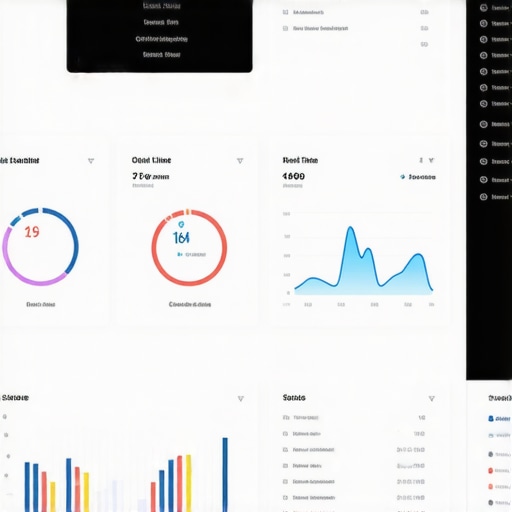
Visualize your GMB signal health with a custom dashboard showcasing real-time diagnostics, trend analysis, and automated alerts. An effective dashboard integrates data from tools like BrightLocal and scripts for ghost pin detection, providing a centralized view for ongoing maintenance.
Throughout this journey, one of the most profound insights I’ve gained is that signal health isn’t just about quick fixes—it’s a continuous dance of vigilance, understanding, and adaptation. The biggest hurdle often lies in recognizing that our manual efforts must be complemented with a strategic mindset; otherwise, ghost pins and misaligned signals will keep haunting your rankings. I once believed that a single cleanup session was enough, only to realize months later that persistent monitoring and iterative improvements are what truly secure long-term success. This iterative approach transforms your local SEO from a reactive game into a proactive masterpiece, ensuring you stay ahead even as Google’s algorithms evolve toward 2026 and beyond.

Geo Smith
Geo is a senior SEO specialist focused on gmb cleanup and local ranking enhancements. He is part of the core team maintaining site performance.


You May Also Like

GMB Signal Repair & Cleanup: Boost Local Rankings Effectively

Stop 4 Invisible Signal Gaps Hiding Your 2026 Map Rank