
GMB Cleanup & Signal Repair: Boost Local Rankings Fast
I remember the exact moment I realized I had messed up my Google My Business (GMB) listing. It was a slow decline, but suddenly my local rankings plummeted, and I felt helpless. After hours of frustration and trial-and-error, I finally cracked the code. That’s when I discovered how powerful a well-executed GMB cleanup combined with strategic signal repair can be for boosting local visibility—and I want to share that breakthrough with you today.
Why Your Local Rankings Might Be Stuck or Falling
If you’ve been struggling with poor local rankings despite good reviews and a decent website, you’re not alone. Many businesses overlook the impact of outdated or incorrect GMB information, fake reviews, or inconsistent signals that Google uses to rank local listings. These issues can cause your listing to be invisible in the map pack, costing you potential customers every day.
Early on, I made a critical mistake—ignoring the importance of a thorough cleanup. I thought minor tweaks would do the trick, but Google is smarter than that. Without fixing underlying issues, your efforts will be like putting a new coat of paint on a sinking ship. I learned that a comprehensive approach, combining effective cleanup strategies with targeted signal repair, is what truly moves the needle. If you want to see real results fast, I suggest diving into proven techniques that I detail in my favorite resources like Effective GMB Cleanup & Signal Repair Techniques for Local Map Pack Success.
Is GMB Cleanup & Signal Repair Overhyped?
When I first heard about these concepts, I was skeptical. It sounded too simple or too technical. I remember thinking, “Will this really make a difference?” Honestly, my early mistake was underestimating the value of a clean, optimized listing. I didn’t realize that Google heavily relies on consistent signals—NAP (Name, Address, Phone), categories, reviews, and more—to determine local rankings. Neglecting these can leave your listing in the shadows, no matter how much effort you put into other SEO tactics.
Now, I know better. Proper cleanup and signal repair are not just buzzwords—they’re foundational to local SEO success. If you’re tired of seeing competitors outrank you in the map pack, it might be time to give your GMB profile a thorough audit and repair. Want to learn how? Check out these expert strategies and start turning your local visibility around today.
Start with a Clean Slate
Think of your GMB profile as a garden. If weeds, dead plants, or clutter remain, nothing will thrive. Begin by auditing every detail of your listing—name, address, phone number (NAP), categories, and business hours. Correct inconsistencies and remove outdated info. Use these strategies to systematically eliminate errors that could harm your rankings.
Remove Duplicates and Spam
Duplicate listings, fake reviews, or spammy edits are like invasive weeds choking your growth. Use Google’s Business Profile Manager to identify duplicates and merge or delete them. Report fake reviews to improve credibility. This foundational cleanup ensures Google trusts your listing as a legitimate, authoritative source.
Optimize Your Signals
Signals are the cues Google uses to gauge your relevance and authority. These include NAP consistency, categories, reviews, photos, and engagement metrics. Think of signals as the breadcrumbs guiding Google’s algorithm to your door. When these are inconsistent or missing, your visibility suffers. Check your signal signals regularly and repair gaps.
Ensure NAP Consistency
Inconsistent name, address, or phone number across your website, directories, and GMB is like sending mixed messages. Use these tips to standardize your NAP. This boosts your credibility and ranking.
Leverage Reviews and Photos
Encourage satisfied customers to leave reviews and upload high-quality photos. Reviews act as social proof and signals of trust, while photos showcase your offerings. Respond to reviews to demonstrate engagement. These signals are akin to positive word-of-mouth, amplifying your relevance in local searches.
Use Data-Driven Adjustments
Track your local rankings and signals using tools like Google Insights or third-party dashboards. Identify which signals are weak or inconsistent. Focus your efforts there, whether that’s acquiring more reviews, updating categories, or fixing inaccurate info. Continuous monitoring and adjustment ensure your GMB profile remains optimized and competitive.
Audit Regularly
Set a schedule—monthly or quarterly—to review your GMB profile. Regular audits catch new issues early, preventing ranking drops. Use these comprehensive techniques to keep your profile in top shape.
Align Signals with Business Goals
Every signal should reflect your current business state. If you’ve expanded services or moved locations, update your GMB accordingly. Consistency between your online signals and actual operations builds authority and trust with Google and customers alike.

Many professionals in local SEO tend to oversimplify GMB cleanup and signal repair, leading to critical mistakes that hinder results. Contrary to popular belief, simply updating your business info or removing spammy reviews isn’t enough to secure top rankings. The real nuance lies in understanding how Google’s algorithm interprets these signals and how to optimize them holistically.
One widespread myth is that Google heavily weighs the quantity of reviews over their quality. In reality, recent studies, such as those summarized by Moz, highlight that review authenticity and consistency play a more significant role in ranking factors than sheer volume. Fake reviews or inconsistent NAP data can actually harm your local visibility more than you think. This is why a strategic cleanup, targeting genuine reviews and accurate signals, is essential.
Here’s an oops to avoid: many get caught in the trap of thinking that signal repair is purely about technical fixes—like correcting NAP or categories. While these are vital, neglecting the behavioral signals, such as engagement metrics and review velocity, can leave your listing undervalued. Advanced practitioners focus on a layered approach—combining technical cleanup with ongoing reputation management and activity boosts to signal relevance consistently.
What about the advanced question—how can I leverage data to refine my signal repair efforts effectively?
Great question. The secret lies in continuous monitoring and adjusting based on insights from tools like Google Insights or third-party dashboards. For example, by analyzing ranking fluctuations after specific cleanup actions, you can identify which signals are still weak and prioritize efforts there. Regular audits, as discussed in this guide, help in maintaining a healthy profile that aligns with evolving Google algorithms.
Remember, the key is not just fixing what’s broken but understanding how each signal interacts with others. For instance, improving your review flow can indirectly boost engagement signals, which in turn enhances your NAP credibility. This interconnected strategy is often overlooked but can be the difference-maker for local rankings. So, avoid the trap of siloed fixes and aim for a comprehensive, data-driven approach.
Have you ever fallen into this trap? Let me know in the comments.
Keep Your GMB Profile in Top Shape with Smart Tools
Maintaining a healthy and optimized Google My Business (GMB) listing is an ongoing process that requires the right tools and strategies. Personally, I rely heavily on BrightLocal for tracking local rankings and NAP consistency. Its detailed reports help me monitor fluctuations and identify when signals start to weaken, allowing for timely interventions. For managing reviews and engagement, I use Reputation.com, which simplifies review generation, monitoring, and response management—crucial for keeping reviews genuine and relevant.
When it comes to cleaning up duplicates and spam, Google Business Profile Manager is indispensable because it provides direct access to merge or delete listings. For technical audits, I often turn to SEMrush Local SEO tools, which help identify inconsistencies in citations and categories across the web. These tools, combined with manual audits, create a comprehensive maintenance system that ensures your signals stay aligned with your business goals.
What about automating the process?
Automation can save hours of manual work. I recommend setting up regular audits with Whitespark Local Citation Finder, which not only finds citation opportunities but also alerts you to inconsistent or outdated listings. Additionally, integrating tools like Google Sheets with APIs from BrightLocal or SEMrush allows for ongoing monitoring and quick updates, ensuring your signals remain consistent without constant manual oversight.
Looking ahead, I predict that AI-driven reputation management and signal repair will become more sophisticated, enabling even faster detection of signal decay and automatic corrections. Staying ahead of these trends means adopting flexible, scalable tools now, so you’re prepared for future shifts in Google’s algorithm.
How do I maintain signal health over time?
Consistency is key. Regularly schedule audits—at least quarterly—to review your NAP accuracy, category relevance, and review flow. Use these strategies to keep your signals aligned and your profile authoritative. Also, engage actively with reviews and update photos periodically to keep your listing fresh and trustworthy. Remember, a proactive approach to maintenance prevents ranking dips and keeps your local visibility high.
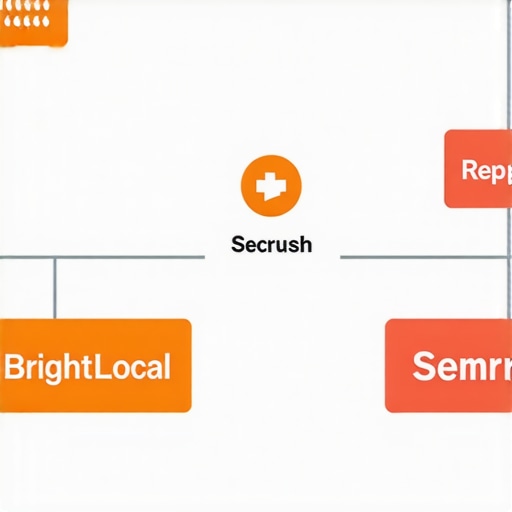
For a visual overview of how these tools integrate into a maintenance workflow, see this process diagram (prompt: “Workflow diagram for GMB signal maintenance using BrightLocal, SEMrush, and reputation management tools”), which illustrates the seamless coordination between different software and manual checks.
Try implementing a monthly review schedule with BrightLocal and SEMrush, and watch how your local rankings stabilize and improve over time. Staying vigilant is your best defense against signal decay and ranking loss.
The Hardest Lesson I Learned About GMB Cleanup and Local Rankings
One of my biggest lightbulb moments was realizing that a superficial cleanup isn’t enough—Google’s algorithm rewards a holistic, layered approach. I used to focus only on removing spammy reviews, but I learned that fixing underlying signal inconsistencies had a much bigger impact on rankings. This taught me that every detail, from NAP consistency to review quality, needs attention. Additionally, I discovered that rushing the process can backfire, causing more confusion for Google and delaying results. Patience and a strategic, step-by-step plan are key.
What I Wish I Knew Before Diving Into Signal Repair
Initially, I underestimated how interconnected signals are. For example, improving review flow indirectly boosts trust signals, which then elevate your NAP credibility. I also learned that tools like BrightLocal and SEMrush aren’t just for monitoring—they teach you where to focus your cleanup efforts. My biggest takeaway is that data-driven adjustments outperform guesswork. Regularly reviewing your local rankings and signals reveals blind spots you might miss otherwise, ensuring your efforts are effective and efficient.
How Neglecting Small Details Can Derail Your Progress
One lesson that hit hard was how minor inconsistencies in your business info across directories can cripple your rankings. It’s easy to overlook small typos or outdated info, but Google notices these and downgrades your listing’s authority. Similarly, fake reviews or spammy edits can do more harm than good. I’ve seen businesses tank their rankings simply because they ignored the importance of ongoing reputation management. The lesson? Never underestimate the power of meticulous, consistent signal repair and cleanup.
Curated Recommendations for Real Results
For effective GMB cleanup and signal repair, I rely on tools like BrightLocal for tracking local rankings, SEMrush for citation consistency, and Google Business Profile Manager for managing duplicates and spam. These tools are trustworthy because they integrate seamlessly into a comprehensive workflow, allowing me to stay proactive and data-driven. Don’t overlook the importance of ongoing audits—regularly revisiting your signals is the secret to sustained growth.
Your Next Step to Local SEO Success
Now is the time to act—your business’s visibility depends on it. Mastering GMB cleanup and signal repair isn’t just about fixing issues; it’s about creating a resilient, authoritative listing that Google trusts and favors. Remember, the effort you put in today will pay dividends tomorrow. Keep learning, stay consistent, and don’t be afraid to experiment with new tactics. Your local rankings are waiting to be unlocked—start today and watch your business thrive!
What’s the biggest challenge you’ve faced with GMB cleanup or signal repair? Share below, and let’s grow together!

John Doe
John is a web developer ensuring site stability and implementing site improvements related to signal repair.





2 Comments
Emily Carter
Reading this article really hit home for me. I’ve seen firsthand how easily small inconsistencies like outdated NAP info or duplicate listings can sabotage your local SEO efforts. What’s striking is how many businesses overlook these minor details, thinking they’re insignificant, but Google sees all. I remember tackling a client’s GMB profile where half the reviews were from fake accounts; once we removed those and cleaned up the listing, their local ranking improved noticeably within weeks. It makes me wonder, how often do others here audit their profiles to check for hidden issues? Also, what tools do you find most effective for ongoing monitoring? I’ve been experimenting with BrightLocal and SEMrush, but I’d love to hear everyone’s go-to strategies for maintaining signal health long-term.
Daniel Morgan
I completely agree with the importance of a thorough GMB cleanup and signal optimization for local SEO. In my experience managing multiple local listings, I’ve found that even small inconsistencies, like a misspelled category or outdated business hours, can significantly impact rankings. I’ve also used BrightLocal extensively for monitoring NAP consistency and review flow, which has been a game changer. One thing I’ve noticed is that ongoing review management, especially encouraging genuine reviews from satisfied customers, helps maintain a steady boost in engagement signals. Has anyone here experimented with sending automated prompts to happy clients? Also, what other tools have you found effective for continuous monitoring beyond the common options? I believe that combining technical cleanup with active reputation management creates a more resilient local profile, especially as Google continues to refine its algorithm. Would love to hear some success stories or strategies that have worked in different industries.